

Our Science
Our Science

We were founded to research and develop PROTAC targeted protein degraders into therapeutics.
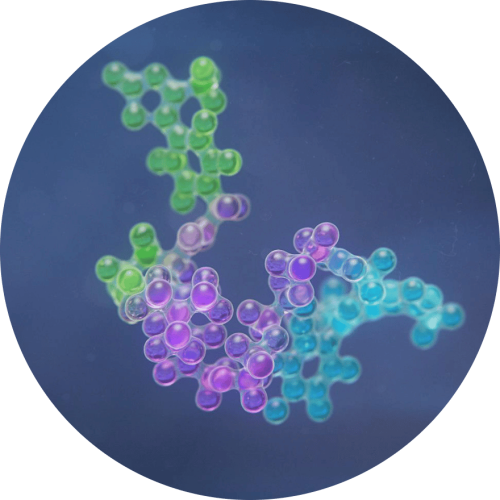
Arvinas’ PROTAC targeted protein degraders, or proteolysis-targeting chimeras, harness the body’s natural protein disposal system to destroy disease-causing proteins.
In the more than 20 years since Arvinas founder Dr. Craig Crews of Yale University co-authored the first paper on targeted protein degradation, Arvinas has continued to advance and evolve this novel technology.
Across multiple diseases, our clinical data to date validates our research platform and targets.

Using Induced Proximity to Leverage the Cell’s Natural Degradation Machinery
Induced proximity is a novel approach to tackling difficult-to-drug targets and diseases by developing medicines that act like molecular matchmakers by bringing two things together. Instead of trying to grapple with difficult targets on their own, induced proximity medicines mobilize biological mechanisms to do the heavy lifting.
The proteasome is the “garbage disposal” of the cell. PROTACs induce targeted protein degradation, selecting disease-causing proteins to be sent to the proteasome, using the cell’s natural method for removing problematic proteins.
Conventional drugs require tight binding to their targets in order to work. PROTACs are more durable and versatile, as they do not need to bind tightly to their targets and can act in a catalytic fashion, inducing the sequential degradation of multiple copies of the target protein.
Advantages of PROTAC-Mediated Protein Degradation

The potential to target the “undruggable”
Traditional small molecule inhibitors often require strong binding to a target protein, frequently to its active site. Since PROTACs only need to bind weakly to the target protein in order to specifically “tag” it, the ~80% of the proteome that is currently “undruggable” may be addressable by PROTACs. Since the PROTAC is not destroyed as it targets disease-causing proteins for elimination, it can act in an iterative or “catalytic” fashion, inducing the sequential degradation of multiple copies of the target protein.

Multiple routes of administration
We can generate PROTACs to be delivered orally, via injection, or via infusion, depending on the disease and need.

Broad distribution in the body
In contrast to some other novel modalities, PROTACs have broad distribution in the body and can be manufactured using well-understood processes.

Crossing the blood-brain barrier
In early clinical studies targeting neurodegenerative diseases, our PROTACs have demonstrated the ability to penetrate the blood-brain barrier, a key step in developing drugs to treat neurodegenerative diseases.

Tissue-specific targeting
Unlike other small molecules, the activity of a PROTAC can be targeted to a specific tissue by recruiting an E3 ligase which is expressed only in that cell lineage.
Building on Arvinas’ Proof of Concept Against Two Disease-Causing Target Proteins
We are the first targeted protein degradation company to develop a therapeutic modality that has shown efficacy signals in patients with breast and prostate cancers.
Vepdegestrant, which targets the estrogen receptor, is being evaluated in the pivotal VERITAC-2 clinical trial, which Arvinas and Pfizer announced met its primary endpoint in the ESR1m population in 2025. Vepdegestrant is being tested in patients with locally advanced or metastatic estrogen receptor (ER) positive / human epidermal growth factor receptor 2 (HER2) negative (ER+/HER2) breast cancer, and a New Drug Application has been filed with the U.S. Food and Drug Administration (FDA). The FDA has assigned a Prescription Drug User Fee Act (PDUFA) action date of June 5, 2026.


In 2024, Arvinas licensed luxdegalutamide (ARV-766) to Novartis. Luxdegalutamide, also known as JSB462, targets the androgen receptor for patients with prostate cancer and achieved proof-of-concept in its Phase 1/2 trials.
Arvinas is currently progressing three additional investigational drugs through clinical development programs, including:
- ARV-102, which targets leucine-rich repeat kinase 2 (LRRK2) for neurodegenerative disorders.
- ARV-806, which targets the Kirsten rat sarcoma (KRAS) G12D protein, a key oncogenic driver in solid tumors with a KRAS G12D mutation.
- ARV-393, which targets the B-cell lymphoma 6 (BCL6) protein, a transcriptional repressor and major driver of B-cell lymphomas.
For the latest information on clinical trials, please visit clinicaltrials.gov.
The agents described above are currently under investigation. Their safety and effectiveness have not been established.



If you’re inspired, please take a look at the current list of opportunities to join our team.
- Arvinas Presents First-in-Human Data for Investigational Oral PROTAC ARV-102 Demonstrating Blood-Brain Barrier Penetration, and Central and Peripheral LRRK2 Degradation. (Press Release, April 4, 2025).
- Arvinas Presents Late Breaking, Positive Phase 1 Clinical Data for ARV-102, a PROTAC LRRK2 Degrader, at the 2025 International Congress of Parkinson’s Disease and Movement Disorders®. (Press Release, October 5, 2025).